Phone:+86 21 84709551
Monday to Friday: 8AM - 6PM

Custom Plastic Bottle Manufacturer in China: Tooling Guide
A tooling and sample-approval guide for brands developing a custom plastic bottle in China.

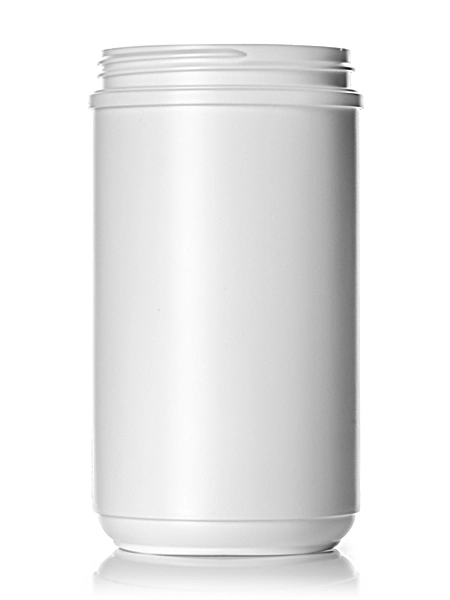
A custom plastic bottle manufacturer China project begins with a product brief and ends with a repeatable bottle running through the filling line. Tooling is only one step in that chain. Resin choice, bottle design, mold construction, first-article approval and decoration must all point to the same production specification.
This guide is for brands and packaging teams planning a new bottle or a substantial modification to an existing container. It explains how to manage design, tooling, samples and production approval before investing in a custom mold.
Decide whether a new mold is justified
A custom bottle can improve shelf differentiation, ergonomics, dosing or production efficiency. It also adds tooling cost, sample time and switching risk. Compare those benefits with the speed and lower technical risk of a qualified stock bottle.
Consider custom tooling when existing containers cannot provide the required shape, capacity, handle, neck interface or brand feature. A change in label design alone rarely justifies a new mold. A change that affects line handling or consumer use may.
Estimate annual volume before requesting tooling prices. A complex mold spread across a small launch volume may produce a high initial unit cost. Ask the supplier to show tooling cost, sample cost and piece price at several realistic volumes.
Write a design brief the manufacturer can quote
Describe the product, filling method, market and use condition. Include target capacity at the fill line, maximum dimensions, neck finish, closure, label area, decoration and any regulatory or contact requirements.
Add the manufacturing constraints: filling temperature, cleaning, capping equipment, case pack, pallet and expected line speed. A bottle that looks right in a render but cannot be filled or capped is not a finished design.
Separate mandatory features from preferences. That gives the mold engineer freedom to improve wall distribution or draft while preserving the requirements that matter.
Select the process with the mold in view
Extrusion blow molding, injection blow molding and injection stretch blow molding create different neck, body and base possibilities. Resin selection and process selection belong together.
PET containers are commonly made through injection stretch blow molding, but preform design and stretch ratio change the final properties. HDPE may suit extrusion blow molding, but handle geometry and wall thickness still require careful design. PP and other resins introduce additional processing considerations.
Ask the custom plastic bottle manufacturer China team to explain the effect of the selected process on tooling, cycle time, visible seams, decoration and drop performance. The answer should be specific to the proposed shape.
Run a design-for-manufacturing review
A useful review identifies risks before steel is cut. The team should examine shoulder transitions, corners, undercuts, handle bridges, neck support, base design and wall distribution. It should also check whether the label and decoration can be applied consistently.
Review the 3D model with the bottle in its intended orientation and with the closure fitted. Mark fill level, closure clearance, label panel and any expected environmental claim or recycled-content feature.
Ask what could change between the 3D drawing and the molded bottle. Plastic shrinkage, cooling and blowing all affect dimensions. Critical dimensions should be marked and measured on the sample rather than inferred from nominal software values.
Set the tooling specification
The mold quotation should identify cavity count, material, expected life, cooling, ejection method, finish and core design. Ask whether the tool will run on the supplier’s current equipment and what maintenance is included.
Clarify ownership before paying. Record whether the mold belongs to the customer or supplier, how changes are authorized, where it is stored, and whether it can be transferred. A customer-owned mold should still have a documented maintenance plan.
For a launch project, a single-cavity or small-cavity tool may be enough to validate the design. Production economics can improve with a multi-cavity mold, but only after the bottle is stable. Ask for both viewpoints.
Use staged first-article approval
Do not approve a bottle from a photo of the tool or a hand sample. Define the first-article report and the measurements that must be checked. Include capacity, weight, height, diameter, neck finish, body runout and critical radii.
Test the first article with the intended closure and filling process. Check leakage, removal torque or dispenser function where applicable. If the bottle will be decorated, approve the bare and decorated stages separately.
Record all changes with version numbers. If the mold is adjusted, the supplier should state which dimensions changed and provide a new sample. Verbal assurance that “the next run will be better” is not a release standard.
Validate the bottle on the filling line
Line trials catch interactions that a dimensional report cannot. Check de-nesting, conveyor stability, orientation, filling, capping, label application, packing and palletizing.
The trial should use production-equivalent resin, closures and equipment settings. Record defects and speed limits. A bottle that runs at only half the intended speed may be technically conforming but commercially unsuitable.
If a co-packer or multiple sites will fill the product, test on the most representative line or clarify which site defines the qualification. A bottle approved on one machine should not be assumed to run everywhere.
Control custom plastic bottle manufacturer China decoration
Approve the decorated sample from the intended process. Confirm artwork scale, registration, print area and color standard. For translucent or colored bottles, the custom plastic bottle manufacturer China team should review decoration against the final resin color, not against white artwork paper.
Define acceptable variation in resin color and decoration. For recycled or natural materials, the range can be wider. Decide whether the label or printed area should mask variation, and avoid making claims that the material cannot support.
Approve the production and packing standard
Create an inspection plan with measurable visual and functional criteria. Include dimensions, weight, finish, leakage, closure fit, decoration and packing. Assign an owner for each release decision.
Review carton quantity, dividers, pallet count and transport protection. A custom bottle may require a custom packing layout. Test both the empty-pack and filled-pack transport conditions if the risk warrants it.
Keep the approved bottle, closure, artwork and inspection standard together. The complete reference package prevents a future supplier from meeting one document while missing another.
Common custom-bottle project mistakes
- Choosing a shape before checking process and mold feasibility.
- Approving a render instead of a measured sample.
- Quoting the bottle without the closure or filling equipment.
- Writing vague tolerances that cannot be inspected consistently.
- Ignoring decoration, packing and freight when calculating unit cost.
- Leaving mold ownership and maintenance undocumented.
Explore HIQ in-house mold development, plastic bottles and jars and design and engineering services. A strong custom plastic bottle manufacturer China selection connects these activities before the first production order.
Frequently asked questions
How long does a custom plastic bottle mold take?
Timing depends on design complexity, tooling capacity, sample iterations and the approving team. Ask for separate durations for design review, mold manufacture, first article and production release.
What does a first-article sample include?
It should include the bottle from the proposed cavity, the intended closure and measured results for critical dimensions, capacity, weight and fit. Add functional tests based on the product and line.
Should the buyer own the mold?
Owning the mold can provide continuity, but practical control matters more than the label. Record storage, maintenance, access, transfer and cost responsibility in the agreement.
Can I use a custom bottle with a stock closure?
Yes, if the neck and functional fit are verified with that stock closure. The finish and closure should be tested together before the bottle design is released.
Start a custom plastic bottle review
Industry reference: Learn about plastics manufacturing resources from the Plastics Industry Association.