Phone:+86 21 84709551
Monday to Friday: 8AM - 6PM

Plastic Bottle China Factory: A Buyer’s Evaluation Guide
A practical guide to evaluating a plastic bottle China factory before you pay for tooling or place a bulk order.

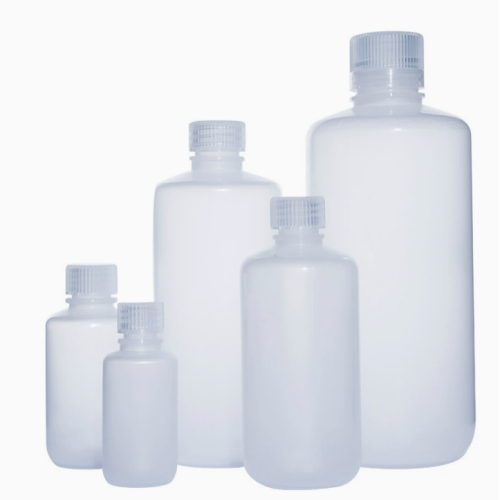
Choosing a plastic bottle China factory is not a test of who can send the longest catalogue. It is a test of whether the supplier can control the link between your formula, the bottle geometry, the mold, the closure and the packing method.
This guide is written for buyers in the United States, Canada and Europe who are comparing a plastic bottle China factory, a converter, or an export-focused supplier. It shows what to verify before you pay for tooling, approve artwork, or commit to a purchase order.
Short answer: confirm the factory can make your bottle specification, prove which processes it controls, approve a physical sample, agree measurable quality criteria, and document mold ownership, MOQ, lead time and Incoterms before production.
What a plastic bottle China factory should actually control
The phrase “factory” is used loosely in packaging supply chains. One company may own extrusion and blow-molding equipment but outsource decoration. Another may make closures, print labels and assemble complete packs. A third may coordinate several factories without operating a molding line.
None of those models is automatically unsuitable. The risk is paying factory-direct assumptions without knowing which activities are controlled by the manufacturer and which are subcontracted. Ask for a process map covering resin intake, molding, trimming, leak or stress testing, decoration, closure fit, final inspection and export packing.
| Project element | Evidence to request |
|---|---|
| Legal entity | Business licence, factory address, export name and bank beneficiary that match the quotation. |
| Molding process | Equipment list or video showing extrusion blow molding, injection blow molding or injection stretch blow molding relevant to your bottle. |
| Molds | Existing mold list, cavity count, ownership record and the approvals needed before using a customer-owned mold. |
| Quality system | Current test records, measurement equipment, acceptable-defect standards and an audit report if one is available. |
| Subcontracted steps | Named scope for decoration, coating, liner insertion, assembly, labeling and export packing. |
A company that openly identifies its manufacturing partners can be more reliable than one that makes broad “our factory” claims but cannot explain where each operation happens.
Match the bottle to the right molding route
Material alone does not determine the correct process. The bottle shape, capacity, wall distribution, neck finish, surface finish and expected annual volume all influence tooling and production planning.
Extrusion blow molding
Extrusion blow molding is commonly used for HDPE and other hollow containers where a handle, squeezable body or larger opening is useful. Ask how the factory controls parison distribution, pinch seams, flash removal and wall thickness at corners.
Injection stretch blow molding
Injection stretch blow molding is widely used for PET bottles. A preform is heated, stretched and blown into a mold. The supplier should connect preform weight, stretch ratio, heat profile and bottle dimensions rather than quoting a generic bottle weight.
Injection blow molding
Injection blow molding can deliver a controlled neck and handle in one process. It may suit certain pharmaceutical, personal-care or industrial containers, but the economics depend on the mold and production volume.
Before choosing a plastic bottle China factory, ask why the proposed process is appropriate for your application. A credible answer should include tooling cost, cycle time, dimensional control and decoration compatibility. If the answer is only “this is our standard,” request a technical review.
Freeze the specification before comparing prices
Quotes are difficult to compare when one supplier prices a nominal 500 ml bottle and another prices a different shoulder height, neck finish and wall weight. Build a specification sheet that includes:
- Nominal capacity, brimful capacity and required fill level.
- Resin type or resin family, color and any recycled-content requirement.
- Neck finish, thread standard where applicable, and intended closure.
- Maximum body diameter, overall height, weight range and critical tolerances.
- Surface finish, label area and decoration method.
- Product-contact, barrier, temperature and chemical-exposure requirements.
- Annual volume, order pattern and destination market.
For a food, cosmetic or pharmaceutical application, state the intended use precisely. The supplier can then provide the relevant material and contact documentation for review. Do not assume a general resin data sheet is sufficient evidence for every market or formula.
Ask for an approval sample, not a beauty shot
A photograph or catalogue sample does not prove that the production cavity will meet your requirements. Request samples from the proposed mold and process whenever possible. Confirm which sample stage you are receiving: concept sample, first article, decoration proof, or production sample.
Measure the sample with the closure fitted. Record capacity at the intended fill line, neck dimensions, body runout, minimum wall where relevant, weight, closure torque and decoration position. For a liquid product, include a leak or compatibility test under conditions that reflect storage and transport.
When the bottle must run on an existing filling line, send the supplier the line constraints and request a line trial. A bottle can meet a drawing and still fail because of unstable handling, poor de-nesting, excessive tilt or an incompatible cap application head.
Independent inspection is part of factory qualification
Large orders may justify a pre-production meeting and a final random inspection. Define the inspection plan before production begins. It should cover the AQL or defect criteria, sample size, measurement method and release authority.
Inspection should not be limited to visual appearance. Depending on the bottle, it may include dimensional checks, closure fit, leak, drop, compression, stress-crack resistance, color comparison, print registration and packing integrity. Keep approved reference samples signed and dated.
An ISO 9001 certificate can indicate that a quality-management system exists, but it does not replace product-specific evidence. Review the certificate’s scope and current status, then ask for the inspection records that will be used on your order.
Understand mold ownership and MOQ
For a custom bottle, the quotation should separate product unit price from tooling. State who owns the mold after payment, whether it may be moved, how it is maintained, and what happens if the relationship ends. A nominal “free mold” offer can still leave the buyer without practical control of the tool.
MOQ is usually tied to mold cavities, resin purchasing, color change and minimum production time. Ask whether the quoted MOQ applies to the first order, each production run, each color, or each decoration version. Request the cost impact of smaller trial volumes and of annual call-offs.
Lead time should identify the starting event: artwork approval, sample approval, mold completion, resin arrival or deposit receipt. Ask separately for tooling lead time, first-article lead time, production lead time and transit time.
Red flags in a factory quotation
Pause when a supplier will not state whether the bottle is molded in-house, cannot explain the neck finish, quotes without capacity or weight, or offers “any color” without a color standard. Other warning signs include missing contact documentation, no traceable sample, vague inspection criteria, and a bank beneficiary different from the contracting company.
Also check that the closure and bottle are evaluated together. If the bottle factory does not make the closure, clarify who is accountable for fit. A split supply chain can work, but the interface must have an owner.
An RFQ that gets useful answers
Send one structured brief: intended product, reference sample or drawing, capacity, neck finish, resin preference, decoration, estimated annual quantity, first-order quantity, destination, target timing and any required tests. Ask the plastic bottle China factory to identify exceptions and assumptions rather than returning a one-line price.
HIQ Packaging reviews plastic containers as part of the full packaging system. You can browse plastic bottle and jar options, review in-house mold development, or compare related guidance on PCR plastic bottles and HDPE versus LDPE squeeze bottles.
Frequently asked questions
How do I verify a plastic bottle China factory?
Match the legal entity, factory location, manufacturing process and bank details. Ask for process video, mold information, current quality evidence, existing product references and a physical sample from the proposed production route.
What should I include in an RFQ?
Include product use, user market, capacity, dimensions, neck finish, closure, resin, decoration, annual volume, first order, destination and required timing. Add any product-contact or performance tests.
Should I approve the bottle and closure separately?
They can be sourced separately, but fit and function must be approved together. Confirm who owns the interface and who will investigate leakage, torque or application issues.
Can I visit the factory before ordering?
Yes, and a visit is especially useful for complex custom projects. If travel is not practical, use a live process review, independent audit and structured sample approval.
Request a plastic bottle project review
Industry reference: Review packaging material and sustainability resources from the Plastics Industry Association.