Phone:+86 21 84709551
Monday to Friday: 8AM - 6PM

How to Choose a Glass Bottle Chinese Supplier
A supplier-selection framework for stock and custom glass bottles sourced from China.

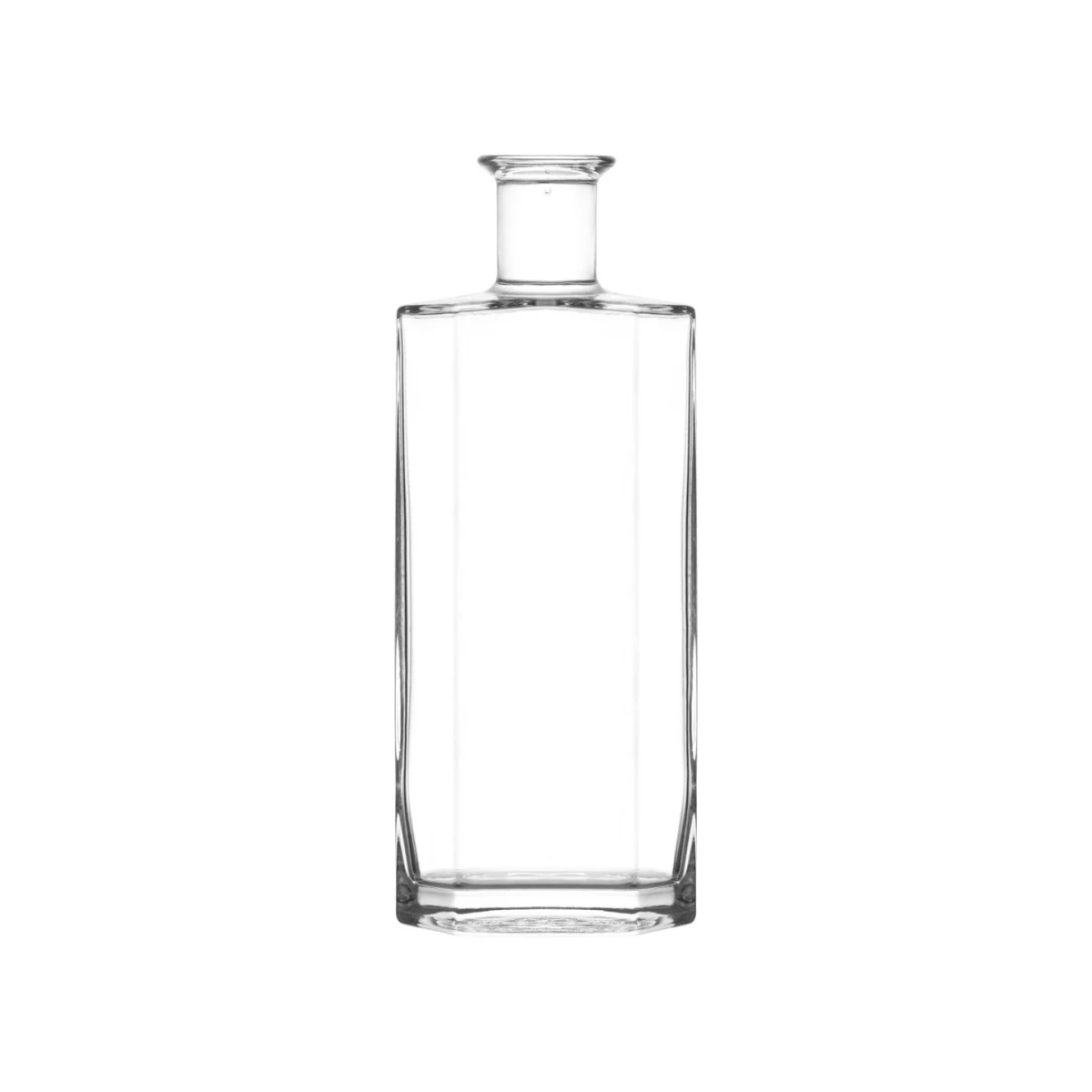
A glass bottle Chinese supplier needs to do more than quote a container. The supplier should connect bottle geometry, mold access, finish, decoration, closure fit and transport packing so that the approved product can be repeated.
This guide helps international buyers compare suppliers for stock and custom glass packaging. It is deliberately focused on selection and supplier management; use the glass bottle China factory guide for plant-level verification.
Begin with the commercial and technical scope
Decide whether your supplier must provide only the bottle or a complete pack with closure, decoration, cartons and packing. Also decide whether you want a stock mold, a customized stock bottle or a new mold.
Provide the intended product, market, capacity, finish, closure, volume and target launch. Add the performance requirements that are visible to the buyer and the ones that only matter on the line, such as dimensional consistency, resistance to cleaning or compatibility with the filling equipment.
A clear scope lets a supplier say no when its route is wrong. That is more valuable than receiving a price based on silent assumptions.
Look for evidence, not adjectives
Ask for three items early: the factory or supply route, a relevant sample from the proposed mold, and an example of how dimensional and visual nonconformance is recorded. These reveal more than claims about “advanced equipment” or “strict QC.”
If the supplier offers an existing mold, request the current bottle drawing and sample. If it proposes a new mold, ask for a design-for-manufacture review covering glass distribution, embossing, finish and base. If decoration is included, identify the decorator.
For the proposed bottle, request the capacity at a specified fill level, weight range, overall height, maximum diameter and finish measurements. A glass bottle Chinese supplier that cannot supply these facts is not ready for a technical comparison.
Assess glass knowledge through practical questions
Ask how the supplier would check an out-of-round body, a chipped finish or a decoration that is misaligned after shipping. Ask whether the critical defect standard is the same as the cosmetic standard.
A strong supplier separates safety, function and appearance. It explains that finish condition and cracks can affect sealing or handling, while certain cosmetic marks may be accepted under a defined limit without compromising the product.
Also ask what happens when the glass plant and the decorator are different companies. Who accepts the bottle into decoration, who owns rejects, and who approves a change in bottle source?
Validate closure responsibility
Glass bottles can be quoted with a “standard” finish that still fails with the chosen closure or filling equipment. Confirm the exact finish, closure, liner, torque target and application method.
Request bottle and closure samples together. Test removal torque, application torque, leakage and vacuum or pressure behavior where relevant to the product. Record the actual liner and product used in the test.
If the supplier does not make the closure, ask whether it can procure and validate a compatible closure. The ideal outcome is one accountable owner for the bottle-closure interface, even if the components come from separate factories.
Ask how the supplier controls decoration
Screen printing, frosting, coating and label application should be reviewed as separate production steps. Request a physical sample, not only a digital proof. Check the print area, registration and overall appearance on the approved glass color.
Confirm yield assumptions between glass and decorator. If decoration failures are high, the commercial impact may be shared differently from defect credit for bare glass. Put that process in the quotation and purchase agreement.
For a brand-color program, define color measurement and the lighting conditions used for approval. For a coated bottle, confirm whether the base, shoulder and finish are included and how the coating is checked after handling.
Compare MOQs with the real needs of the launch
Glass suppliers may set MOQ around a production run rather than a warehouse pick. Decoration, custom color and packing add their own minimums. Ask what the supplier can combine without creating a quality or traceability problem.
If the first launch volume is below the factory MOQ, discuss a properly costed stock option, a smaller decorated run or a staged order. Do not assume that an attractive sample price applies to the requested quantity.
Confirm whether the MOQ is measured before or after breakage allowance and whether damaged units are replaced, credited or excluded. Read the acceptance clause carefully.
Expose the true landed cost
Quote the same packing and Incoterm across suppliers. Glass freight responds to pallet dimensions, stack height, gross weight and breakage protection. A bottle with a lower FOB price can lose its advantage when cartons are inefficient.
Ask for bottle weight, carton count, pallet footprint, gross weight and loading estimate. Model the number of saleable units, not only the number invoiced. Include inspection and potential replacement cost.
Confirm HS classification, origin documentation and current import requirements with a customs broker. “China sourcing” does not have one universal duty rate or rule.
Review glass bottle Chinese supplier quality data
Request a recent inspection report for a similar product. Check whether the glass bottle Chinese supplier uses measurable criteria and whether the sample size is described. Look for trends, not only a pass stamp.
Ask for an example of a corrective action. Did the supplier identify the root cause, change a process or inspection point, and verify effectiveness? A good answer shows how problems are prevented, not only how a credit is issued.
Keep an approved reference sample and a signed defect standard. When a reorder arrives, compare it with the retained sample and current drawing, not with memory.
Plan loading, receiving and reorders
Agree packing photos, pallet labels and carton marking before shipment. Review the loading plan for bottle orientation and access to the finish. If the container will be inspected, define the inspection point and access requirements.
At receiving, count cartons, inspect external damage and sample the declared quality characteristics. Report issues with photos, pallet and carton identifiers, and the approved reference so that the supplier can investigate.
For repeat orders, verify whether the mold, glass plant, decorator or packing source changed. A supplier name on a quotation does not guarantee that an unchanged production route made the second batch.
Shortlist and proceed with a controlled sample
A glass bottle Chinese supplier should be able to explain its recommended route, provide traceable samples and define the decisions that precede tooling or bulk production. Start with a paid sample or controlled stock trial when the project is still uncertain.
Explore glass bottles and jars, caps and closures or the 24-410 versus 28-410 finish comparison. Share the product and destination with HIQ Packaging through the project inquiry page.
Frequently asked questions
How do I compare glass bottle suppliers?
Give every candidate the same specification, volume, decoration and Incoterm. Compare their technical route, mold evidence, sample quality, MOQ, packed quantity and supplier accountability.
Can one supplier provide bottle and closure?
Some suppliers coordinate both. Confirm who validates fit and who investigates leakage or application issues. The bottle and closure should be tested together even when they have different manufacturers.
What should a first sample include?
Include the bottle, intended closure, dimensions, finish data, capacity, weight and decoration where applicable. Identify the mold and process and retain a signed approval record.
How should glass breakage be handled?
Agree packing standards, inspection, claim evidence and remedy before shipment. A credit arrangement does not replace investigation of whether the cause was bottle quality, packing or transport.
Discuss a glass bottle supplier brief
Industry reference: Review glass packaging resources from the Glass Packaging Institute.