Phone:+86 21 84709551
Monday to Friday: 8AM - 6PM

How to Choose a Plastic Bottle Chinese Supplier
How to compare factories, integrators and sourcing companies when selecting a plastic bottle Chinese supplier.

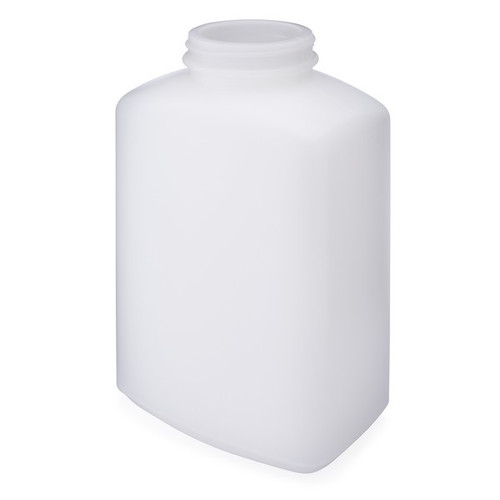
The best plastic bottle Chinese supplier is not necessarily the factory with the largest website or the lowest first quote. It is the supplier whose manufacturing access, technical judgment and commercial controls match your bottle, volume and risk.
This guide gives buyers a practical way to shortlist a plastic bottle Chinese supplier for stock, customized or fully bespoke containers. It focuses on the supplier relationship and decision criteria, while the plastic bottle China factory guide covers plant-level qualification.
Define the role you need the supplier to perform
Some buyers need a stock bottle delivered quickly. Others need a custom mold, a matching pump, decoration and packed export cartons. Those requirements call for different supplier capabilities.
Write a decision brief with four headings: container, closure or dispenser, decoration and logistics. Mark which items must be sourced together and which can be handled separately. This prevents a strong bottle supplier from being selected for a project it cannot coordinate.
Also state your internal capability. If you have a packaging engineer, you may need production access more than design support. If not, a supplier that can explain fit, tolerances and validation may reduce project risk.
Understand the three common supplier models
| Supplier model | Potential advantage | Question to verify |
|---|---|---|
| Molder or converter | Direct process control and mold knowledge. | Does it control decoration, closures and export packing, or will those steps be subcontracted? |
| Integrated packaging supplier | Can coordinate bottle, closure, decoration and delivery. | Who is contractually responsible for each component, and how are deviations resolved? |
| Trader or sourcing agent | Access to several factories and stock ranges. | Can it provide transparent factory identity, technical review and a definite quality owner? |
A factory is not automatically the best choice for every order. An experienced supplier that coordinates several makers can be useful when the bottle, pump, cap and decoration must arrive as a complete pack.
Evaluate technical questions before commercial charm
Send a short technical question with your inquiry. Ask how the supplier would select a process for a specific capacity and material, how the neck finish will be checked, or what test is appropriate for the product. Compare the quality, specificity and timeliness of the answer.
A supplier that repeats “high quality, best price” has not demonstrated technical judgment. A useful response identifies missing inputs, explains assumptions and separates an existing-product path from a custom-tooling path.
Ask for a recommendation in writing. This creates a technical record you can compare with the approved sample and purchase specification.
Verify manufacturing access
Request the factory name and location, the process used to make the proposed bottle, and evidence that the supplier can control or monitor the production. For a custom project, ask about the mold shop, cavity count and sample stages.
A video call can show the production environment and let you ask follow-up questions. It does not eliminate the need for documents or samples, but it is useful when a physical visit is not practical.
Check that the company name on the quotation, bank details, business licence and shipping documents is consistent. If a different legal entity receives payment, ask why and obtain a clear written explanation.
Use a supplier scorecard
Score shortlisted suppliers on the factors that affect your project. Weight technical capability more heavily than catalogue size, and treat missing evidence as risk rather than a neutral score.
- Experience with the proposed resin and molding process.
- Access to suitable stock molds or proven custom tooling.
- Clarity on bottle, closure and decoration responsibility.
- Sample availability and quality of measurement records.
- MOQ, lead-time definition and change-control process.
- Quality inspection, documentation and corrective-action response.
- English communication and project-management reliability.
- Commercial transparency, payment terms and export experience.
Ask two suppliers to quote the same specification and use the same scorecard. Avoid rewarding a fast email with a short or inconsistent technical proposal.
Test the relationship with a small order or paid sample
A paid sample project reveals more than a long audit questionnaire. It shows how the supplier handles drawings, questions, measurements, packaging and deadlines.
Define what the trial must prove. It might be stock-bottle dimensional consistency, a printed sample, closure compatibility or the ability to ship a mixed pack with correct labels. Record the evidence and the response to any exception.
Do not expect a custom mold trial to be free. The purpose is not to extract free work; it is to confirm that the supplier can execute a controlled, documented process.
Ask about quality ownership
Who signs the inspection report? Who investigates a leak? Who decides whether a bottle outside a drawing limit is acceptable? Those questions reveal whether quality is a real function or a sales phrase.
Request the defect standard and the record that will accompany a production lot. If third-party inspection is used, clarify whether the supplier will support access, provide samples and close findings.
For related applications, PCR plastic bottles require additional evidence on recycled content, color range and odor. HDPE and LDPE squeeze bottles need different checks for stiffness and recovery.
Review MOQ, lead time and change control
Confirm what triggers a higher MOQ: custom color, decoration, a nonstandard closure or a new mold. Ask whether the supplier can support a launch order followed by smaller replenishments and how pricing changes with volume.
Define lead time from an agreed event such as approved artwork or receipt of deposit. Include sample approval inside the project schedule. Ask who bears expediting cost and how schedule changes are communicated.
Use a simple change-control form for resin, mold, decoration, packing and destination. A technical change should not be accepted through an informal chat message and then remembered differently at production.
What good plastic bottle Chinese supplier support looks like
Ask for one commercial contact and one technical contact. A plastic bottle Chinese supplier should confirm who covers time-zone gaps and how urgent quality issues are escalated. Test the process before an order is late.
Written confirmations, versioned drawings and meeting notes reduce ambiguity. Prompt replies are helpful, but consistent decisions and traceable approvals matter more.
A final supplier qualification checklist
Before appointing a plastic bottle Chinese supplier, confirm the bottle specification, production source, approved sample, closure fit, tooling ownership, defect standard, MOQ, lead time, packing and Incoterm. Keep the documents in one project folder.
Review plastic bottles and jars or caps and closures, then send HIQ Packaging the product, quantity and destination through the project inquiry page.
Frequently asked questions
How can I tell whether a supplier is a factory or trader?
Ask for the manufacturing site, process, mold information, business entity and process evidence. Cross-check the company name and address in the quotation, licence and payment details.
Are trading companies less reliable than factories?
Not necessarily. The real issue is whether the supplier can provide credible technical support, transparent production and clear accountability. A good coordinator can be more useful than a factory with limited export capability.
Should I request a free sample?
A free stock sample may be available, while a custom or decorated sample often carries a charge. Paying for a documented sample can reduce risk and clarify whether the supplier can follow the specification.
What is the most important question to ask?
Ask the supplier to explain which process and evidence make the proposed bottle suitable for your product, closure and filling line. The answer should be specific enough to verify.
Compare a plastic bottle project with HIQ
Industry reference: Review plastics material information from the Plastics Industry Association.